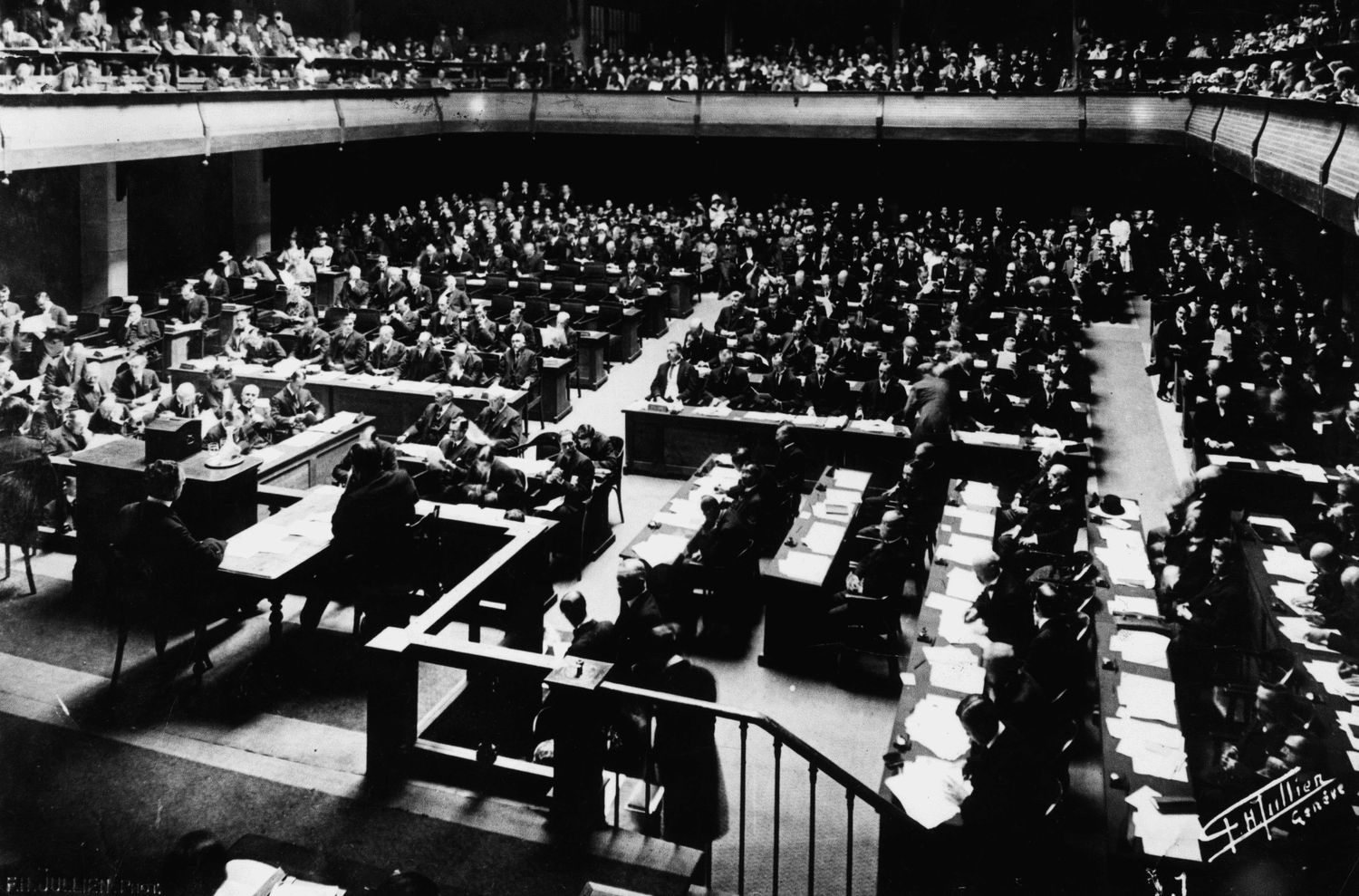
League Of Nations Details
What Is the League of Nations?
The League of Nations was an international organization established after World War I, aimed at maintaining world peace and preventing future conflicts. It was composed of member states from around the world who committed to collective security and diplomatic negotiations. The League had an Assembly, where all member states were represented, and a Council, which included major powers such as the United Kingdom, France, Italy, Japan, and initially Germany as a permanent member before it withdrew. Other members were elected for limited terms. The League of Nations was tasked with resolving disputes through dialogue and arbitration, imposing economic sanctions, and, in theory, using collective military action to prevent aggression. Despite its pioneering role in international diplomacy, the League faced significant challenges, including limited enforcement power and the absence of key countries, which ultimately led to its replacement by the United Nations after World War II.
Topics
Response to the German annexation of the Sudetenland (October 2nd, 1938)
This topic involves analyzing the international response to the German annexation of the Sudetenland in 1938. It explores the diplomatic and political conditions that shaped the reactions of key global powers, including the policy of appeasement pursued by Britain and France, the role of the League of Nations, and the strategic calculations made by Czechoslovakia and its neighbors. The discussion includes the mechanisms employed to address territorial disputes, the influence of nationalist and expansionist ideologies, and the impact of the Munich Agreement on European stability. Furthermore, it considers the challenges posed by differing national interests, the limitations of collective security frameworks of the time, and the long-term consequences for international order leading up to World War II.
Responding to the Japanese invasion of Manchuria (November 1st, 1931)
The Japanese invasion of Manchuria on November 1, 1931 exposed the need for a robust, coordinated international response to acts of aggression. It violated national sovereignty and destabilized East Asia, yet the League of Nations’ condemnation lacked enforcement and meaningful sanctions, revealing critical limits in interwar global governance. This episode underscores the necessity of effective international mechanisms, accountable leadership, and reliable security measures in resolving conflicts. Contemporary responses to similar invasions demand trust, cooperation, and genuine oversight to halt violence and secure durable peace; absent these elements, conflict and human rights abuses are likely to persist.